“2014: The War the World Still Needs to Recognize”: Conference Panel Discusses Memory, Loss, and the Unlearned Lessons of Russia’s Aggression Against Ukraine
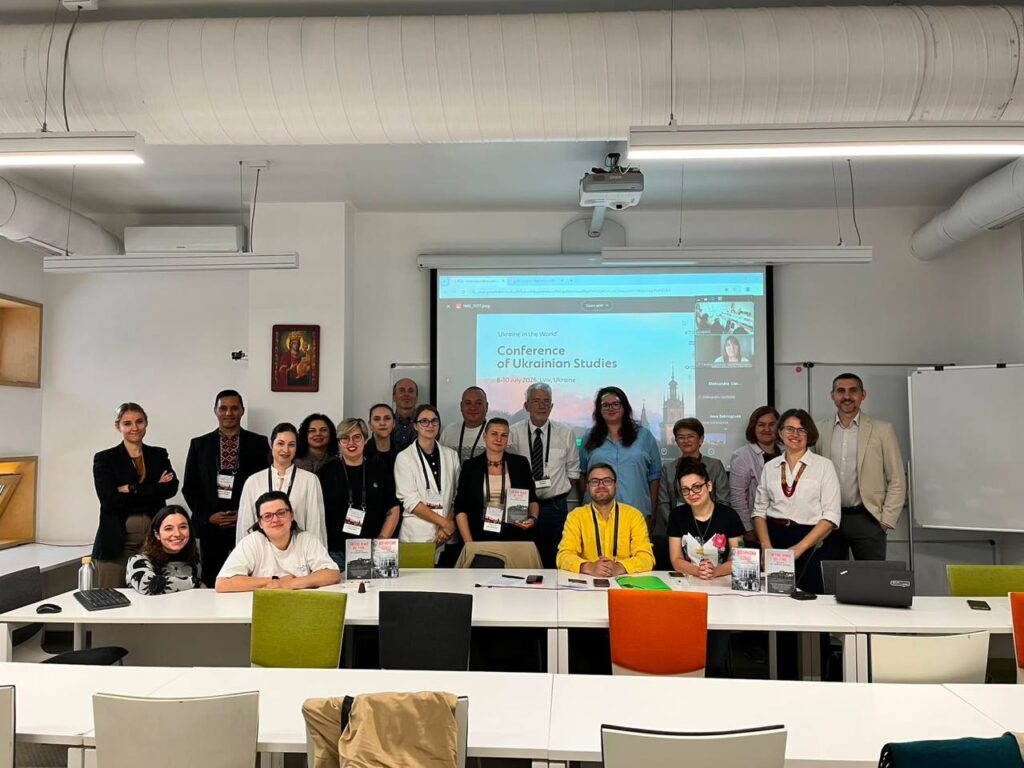
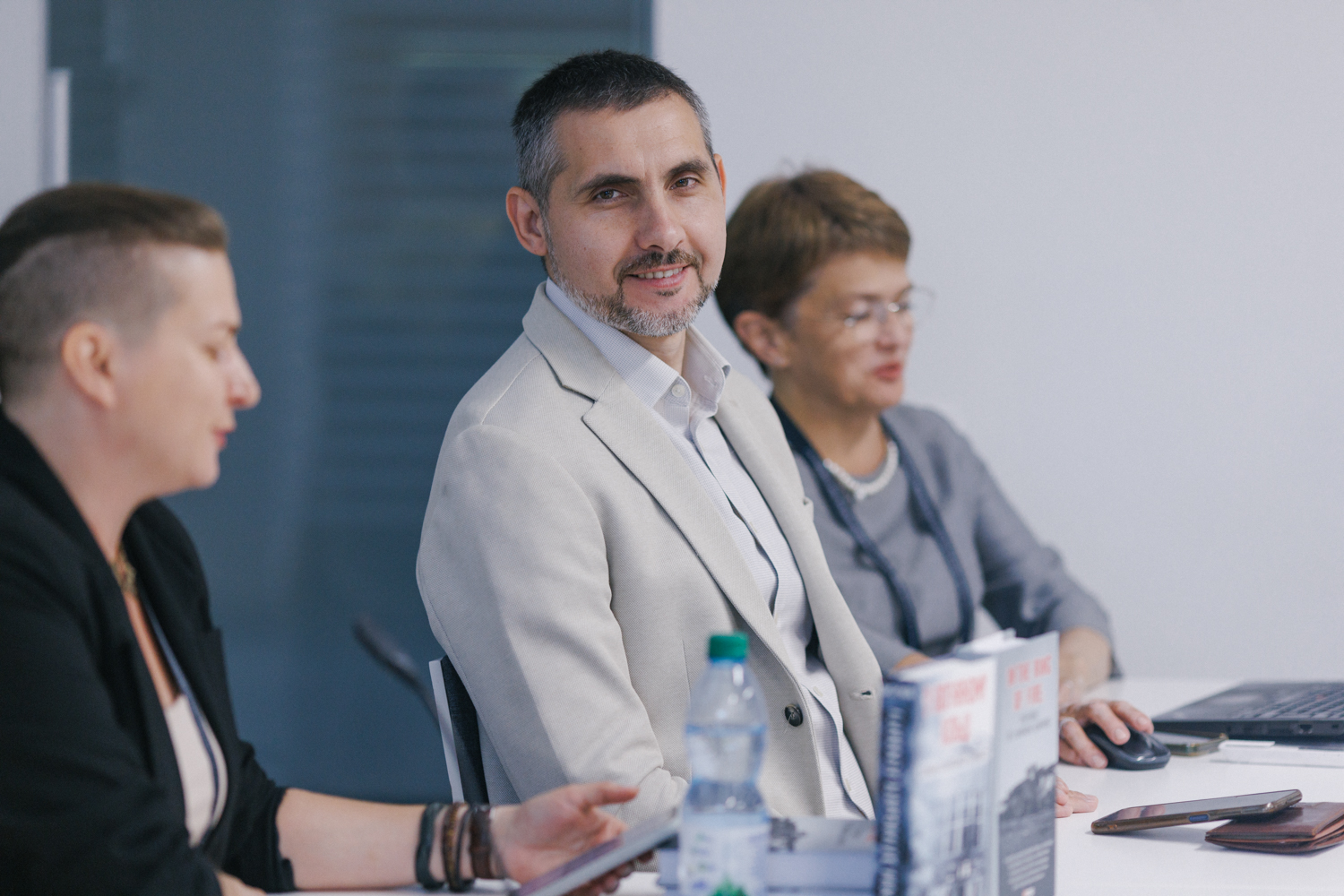
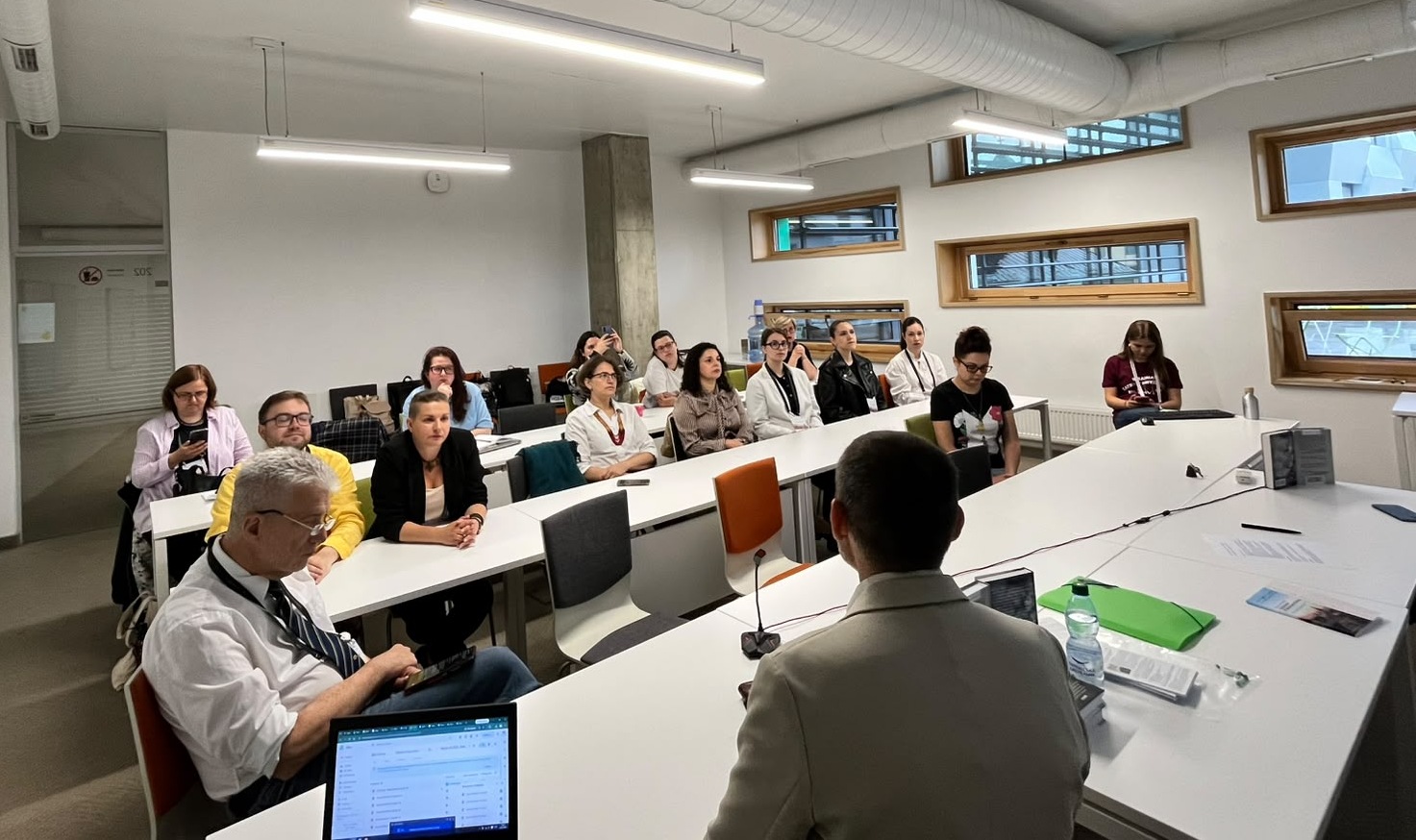
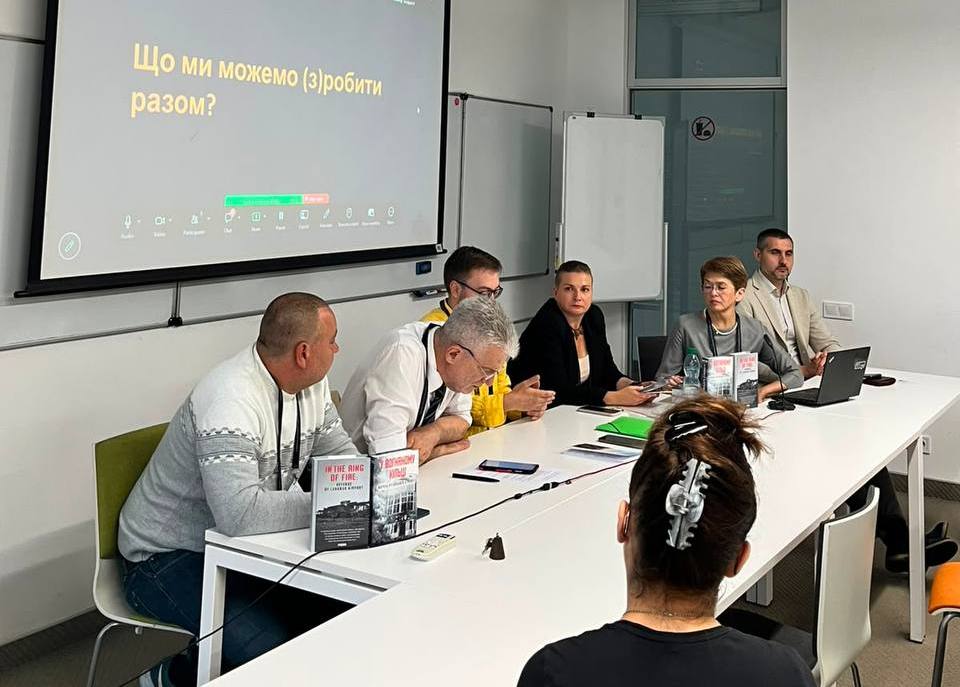
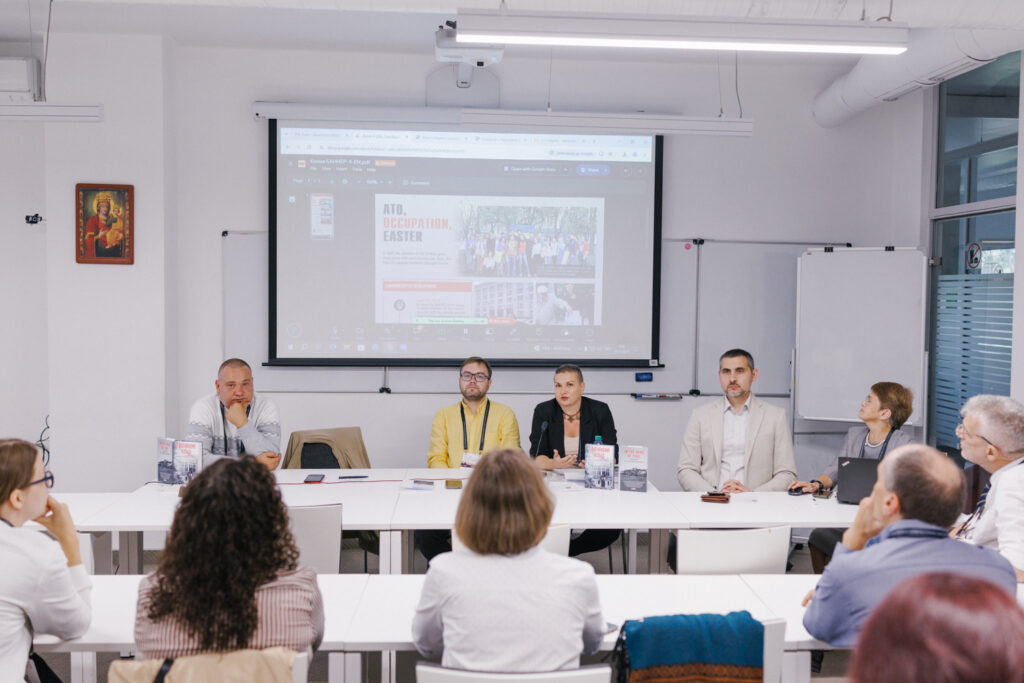
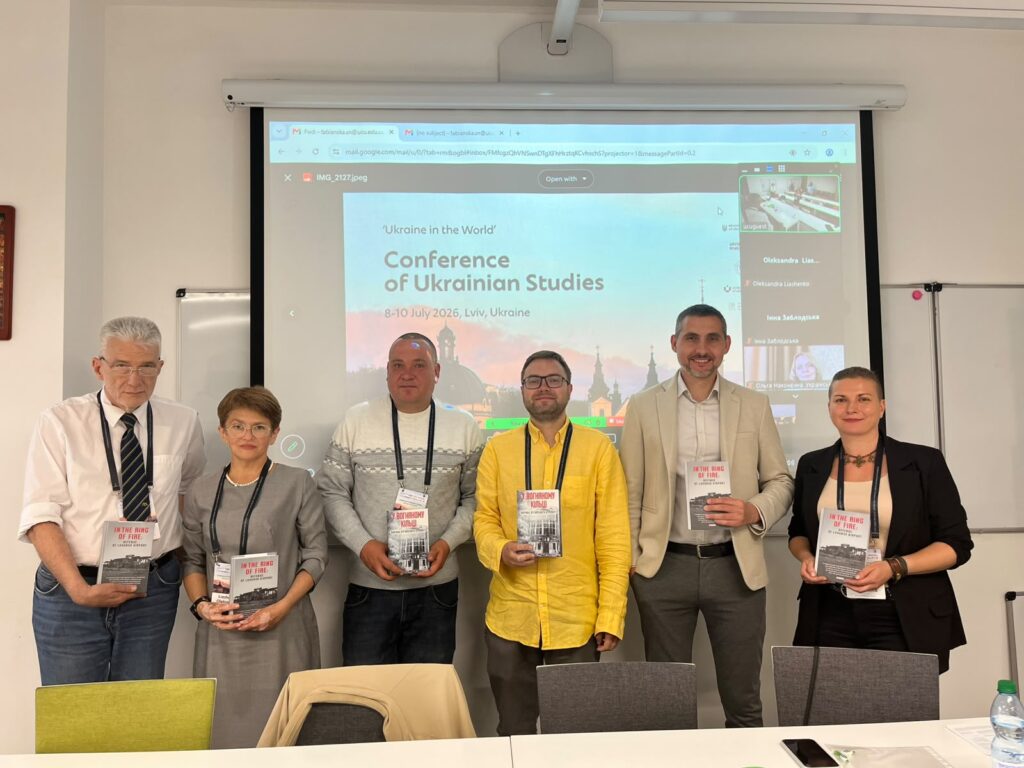
As part of the international conference Ukraine in the World, held on 8–10 July 2026 at OsloMet – Oslo Metropolitan University, a panel discussion titled “2014: The War the World Still Needs to Recognize” brought together Ukrainian researchers, journalists, experts, volunteers, and witnesses of the events that marked the beginning of Russia’s war against Ukraine.
The discussion focused on why 2014 remains insufficiently understood not only by the international community, but sometimes within Ukraine itself; how Russia prepared its aggression through language and narratives; why Ukrainian resistance in the East and South remained largely invisible for years; how the international community responded to the beginning of the war; and why preserving and documenting memory is not only a historical responsibility, but also a matter of national and international security.
One of the central ideas of the panel was that 2014 should not be viewed merely as a prelude to Russia’s full-scale invasion in 2022. Rather, it was the beginning of Russia’s war against Ukraine and already contained the core logic that would later unfold on a much larger scale: military aggression, occupation of Ukrainian territory, denial of Russian responsibility, creation of proxy entities, information warfare, attempts to frame external aggression as an internal conflict, and testing the limits of the international community’s willingness to respond.
The title of the conference itself — Ukraine in the World, rather than “Ukraine and the World” — also became part of the discussion. As moderator Andrii Kulykov emphasized, this wording restores Ukraine’s agency. Ukraine is not separate from the world, and the world cannot treat Russia’s war against Ukraine as something remote or external to its own security.
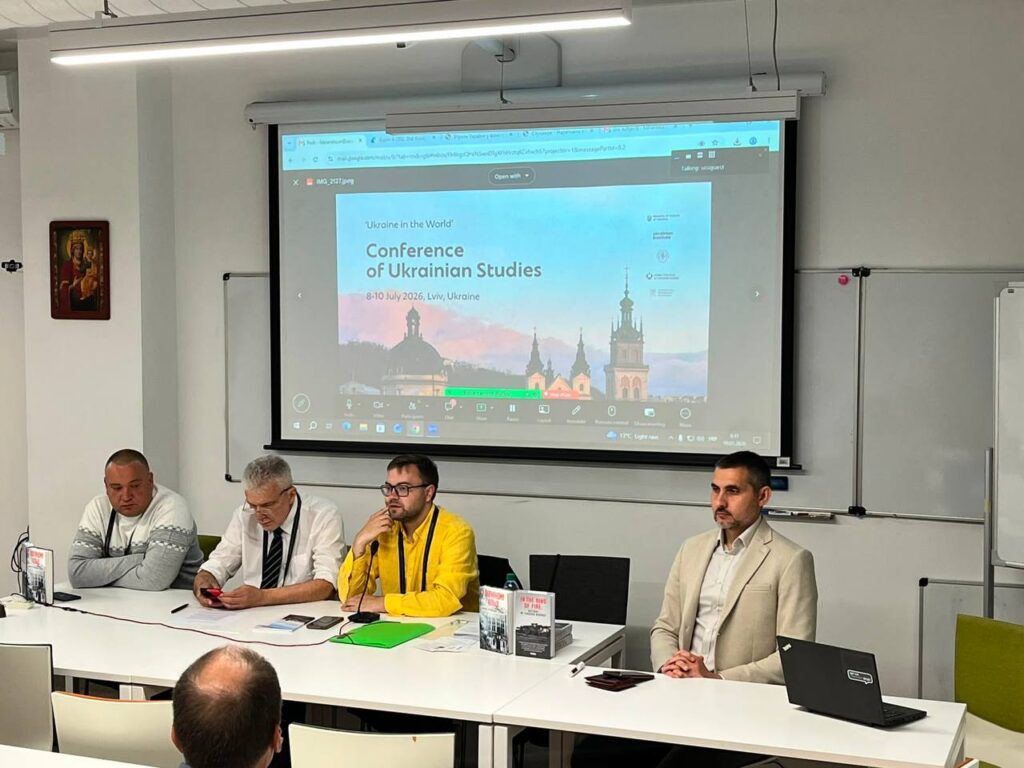
War Begins Not Only with Weapons, but with Words
The first major theme of the panel concerned the narrative preparation of Russian aggression.
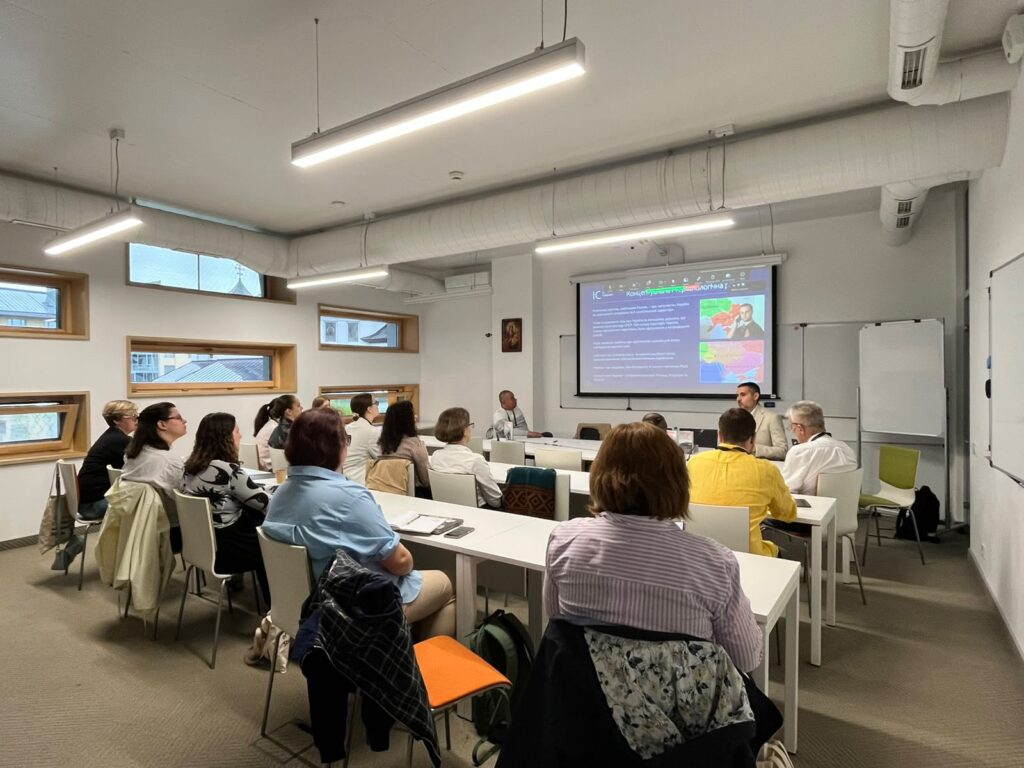
Serhii Stukanov noted that in 2014 Ukraine was significantly less prepared for cognitive and information warfare than the Russian Federation. For years, Russia had been constructing a vocabulary, imagery, and explanatory framework designed to portray Ukraine as an artificial and internally divided state.
This process relied on carefully selected terminology. The Russian concept of the so-called “South-East” of Ukraine was promoted for years and was later supplemented by the imperial term “Novorossiya.” Maps depicting Ukraine as a fragmented country were widely circulated, while Ukrainian territories were presented as supposedly belonging historically or culturally to neighbouring states.
By 2014, this narrative groundwork enabled Russia to portray the Revolution of Dignity as an “unconstitutional coup” and the occupation of Crimea and the outbreak of war in eastern Ukraine as an allegedly spontaneous “uprising of the local population.”
Ukraine, by contrast, was often forced into a reactive communication strategy. Instead of setting its own framework for understanding events, it frequently responded to and disproved Russian claims. Even while challenging disinformation, Ukraine was therefore often operating within an agenda already defined by the aggressor.
The discussion also stressed the importance of the language Ukrainians themselves use to describe the country’s regions. In particular, participants argued for abandoning the imposed geopolitical construct of the “South-East” and instead speaking of the East and the South of Ukraine — distinct regions with complex histories, diverse communities, and their own traditions of Ukrainian civic and political resistance.
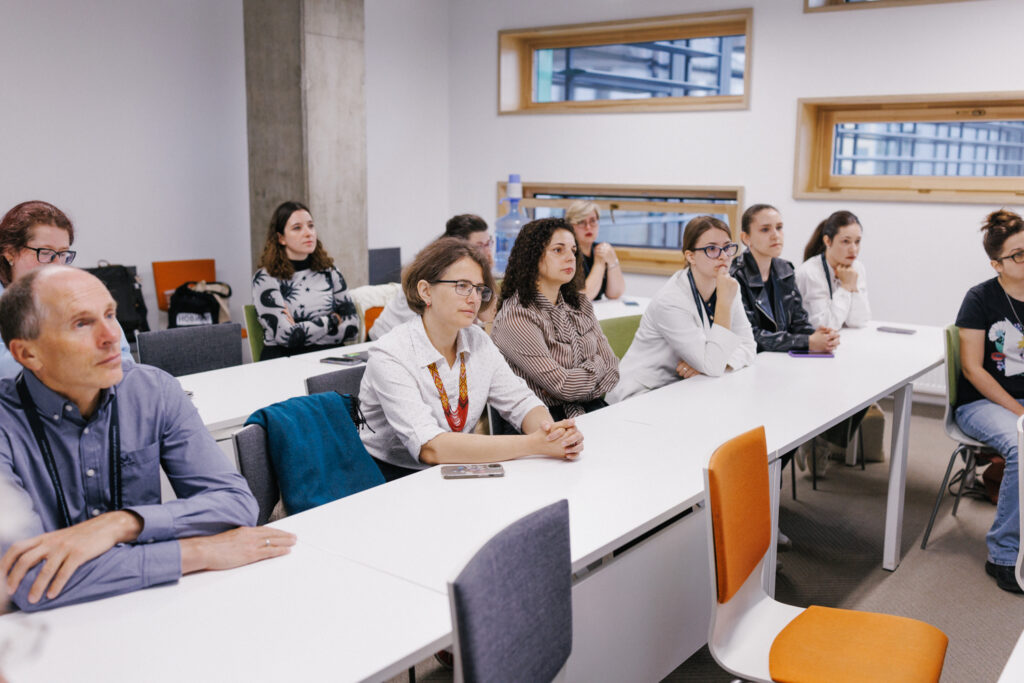
The Ukrainians of the East and South Who Remained Invisible for Too Long
Another major theme was the long-standing invisibility of Ukrainian resistance in the East and South of the country.
In 2014, international audiences largely saw these regions through a Russian information lens. Yet the problem was broader. Local Euromaidan movements in Luhansk, Donetsk, and other cities, as well as local activists, volunteers, military personnel, and civilians who resisted Russian aggression, did not always receive sufficient attention even within Ukraine’s national information space.
A particularly important part of the discussion concerned the Defence of Luhansk Airport.
Serhii Hlotov, a participant in the Luhansk Euromaidan, a scientist, and one of the initiators of the book documenting the defence of the airport, recalled that one of the reasons for beginning work on the book was the almost complete information vacuum surrounding those events.
When the team searched online in 2015 for Ukrainian-language information about the 146-day defence of Luhansk Airport, they found remarkably few Ukrainian media materials, while the information space was dominated by Russian and separatist sources.
For the team, documentation therefore became a form of resistance. The memories of direct participants had to be recorded before they could be displaced, distorted, or replaced by someone else’s version of events.
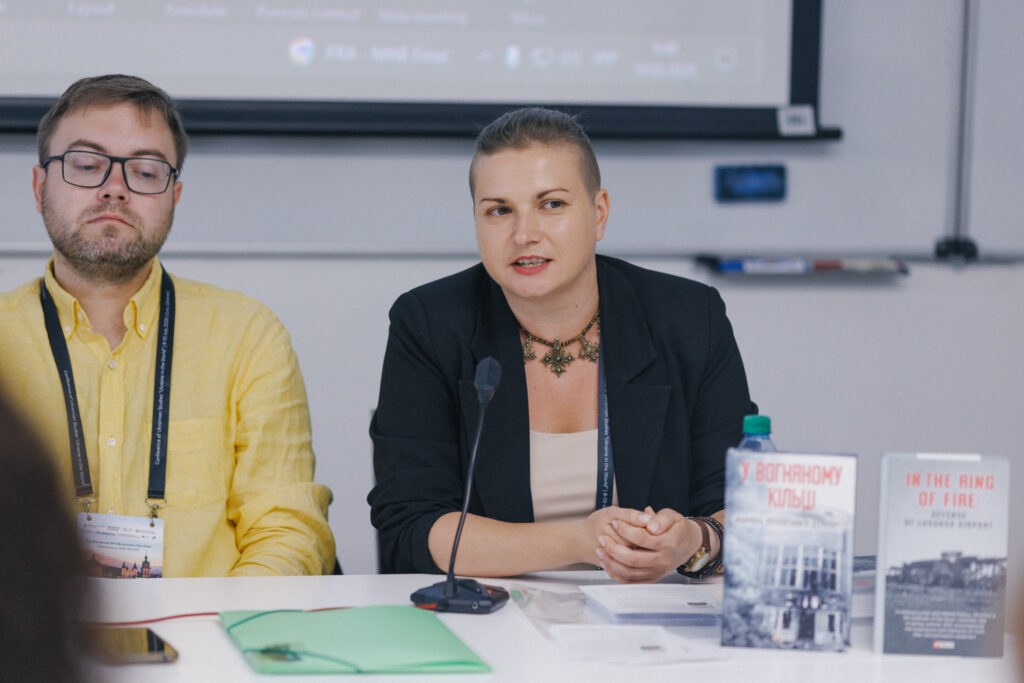
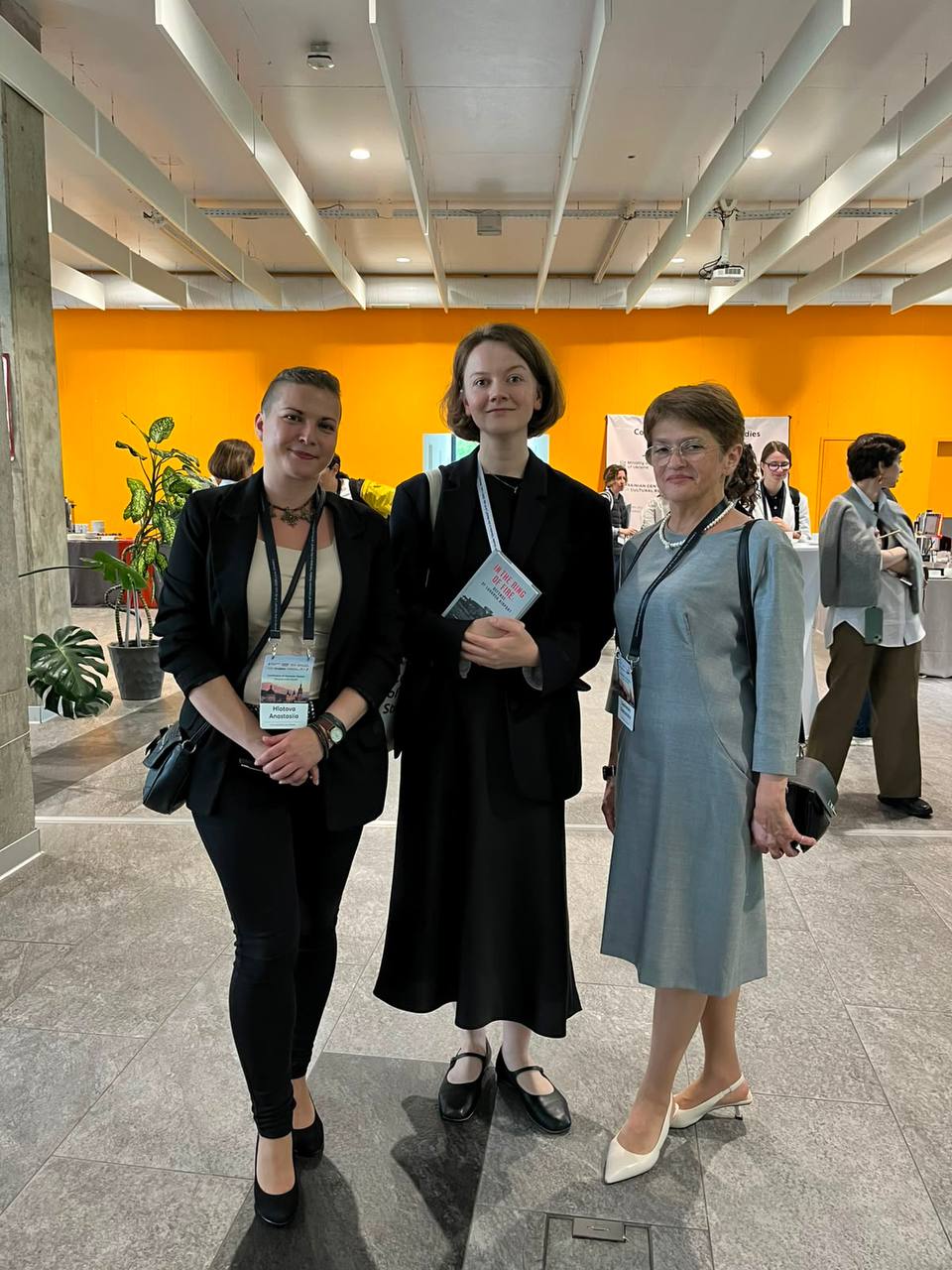
Anastasiia Hlotova, translator, volunteer, and co-author of the book, spoke about another little-known dimension of the defence of Luhansk Airport: the support provided by local civilians.
Residents of villages and settlements surrounding the airport brought water and food to Ukrainian soldiers, cooked meals for them, provided accommodation, and assisted military personnel during operations. After Russia and its proxies established control over these territories, some of those who had supported the Ukrainian military were persecuted.
These stories fundamentally challenge the simplistic image of Luhansk region as a territory that supposedly accepted Russian aggression without resistance.
Ukraine was present in Luhansk then, just as it is today. Ukrainian resistance in the region did not begin in 2022.
One of the messages repeatedly highlighted during the discussion was therefore simple but powerful: Ukraine is Luhansk, too.
Why the World Spoke of a “Crisis” in 2014 When a War Was Already Underway
Historian Yehor Brailian focused on the international response to the events of 2014.
One of the key problems, he argued, was the language used by international media and policymakers. For years, terms such as the “Ukraine crisis,” the “crisis in Ukraine,” or the “Crimean crisis” were widespread.
Such language blurred responsibility. Instead of clearly stating that Russia had launched aggression against Ukraine, these formulations created the impression of an internal instability or conflict that had somehow emerged within Ukraine itself.
The first sanctions against the Russian Federation, Russia’s suspension from the G8, and other measures failed to generate sufficient deterrence. Russia remained deeply integrated into political and economic relations with European states, while major joint projects continued.
Brailian also noted that the events of 2014 effectively forced NATO to refocus on European security after years in which much of its attention had been directed elsewhere, including Afghanistan.
A major turning point in international perception was the downing of Malaysia Airlines Flight MH17 on 17 July 2014, which killed all 298 people on board. The tragedy demonstrated that a war often described internationally as a regional “crisis” had direct consequences for citizens of many countries.
One of the central lessons of 2014 is therefore that a threat does not become less dangerous simply because it is described in softer terms.
When aggression is called a “crisis” and war is framed as an “internal conflict,” terminology affects not only public understanding, but also the scale and urgency of the political response.
Memory as Security Infrastructure
One of the most important themes of the panel was documentation.
Books, archives, oral testimonies, photographs, digitised materials, exhibitions, and museum projects are often viewed primarily as instruments for preserving the past. The experience of Russia’s war against Ukraine shows that their function is much broader.
Documentation creates evidence.
Serhii Hlotov stressed that recording the testimonies of people who directly participated in the Defence of Luhansk Airport created a source base that is far more resistant to later manipulation.
In this sense, memory itself becomes part of national resilience.
The destruction of memory is also an element of occupation. In territories occupied by Russia after 2022, Ukrainian books — including publications about the Revolution of Dignity and Russia’s war against Ukraine — have been removed from libraries and educational institutions.
The struggle for territory is therefore accompanied by a struggle over what people will remember about that territory, its history, and their own identity.
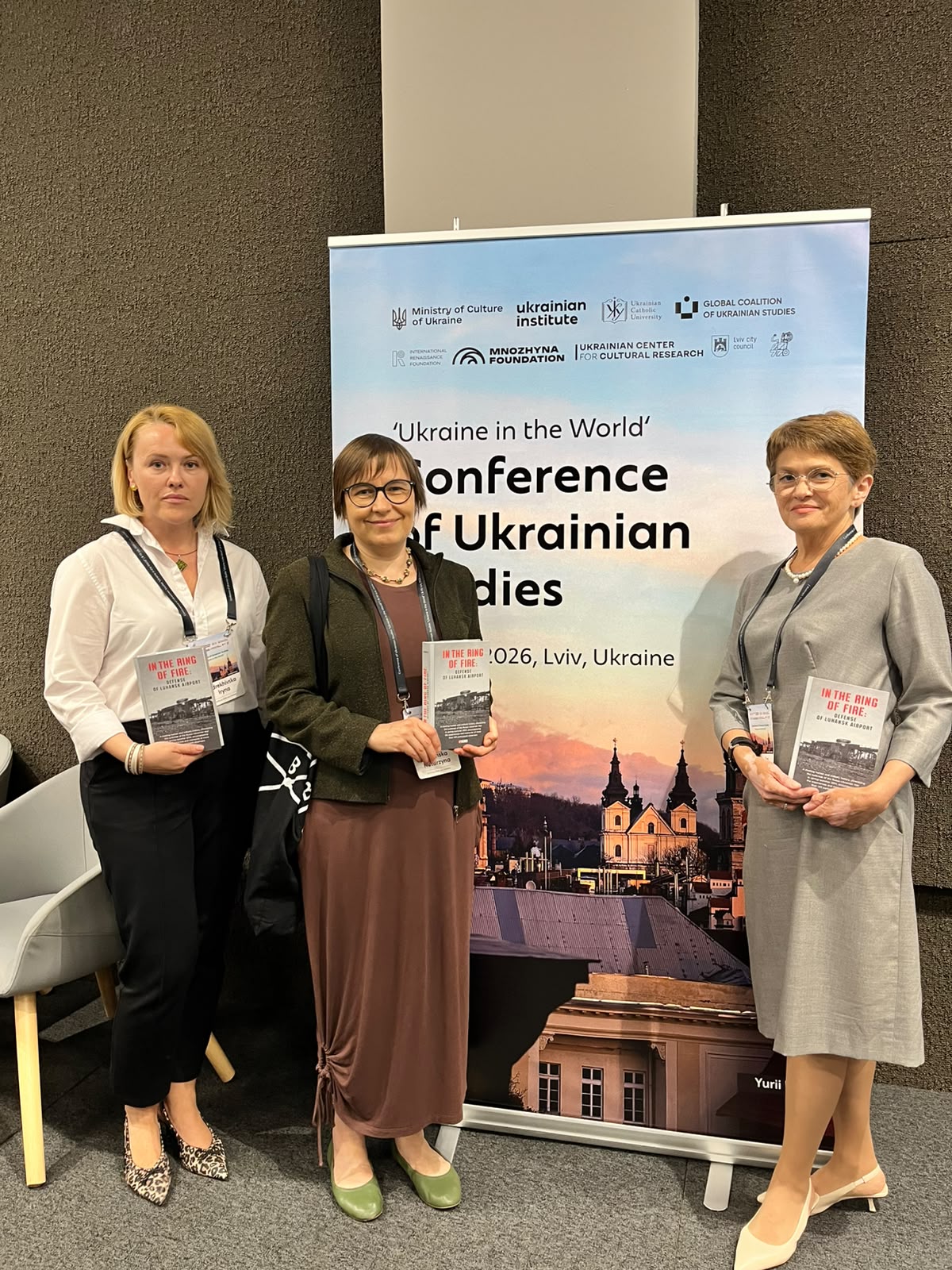
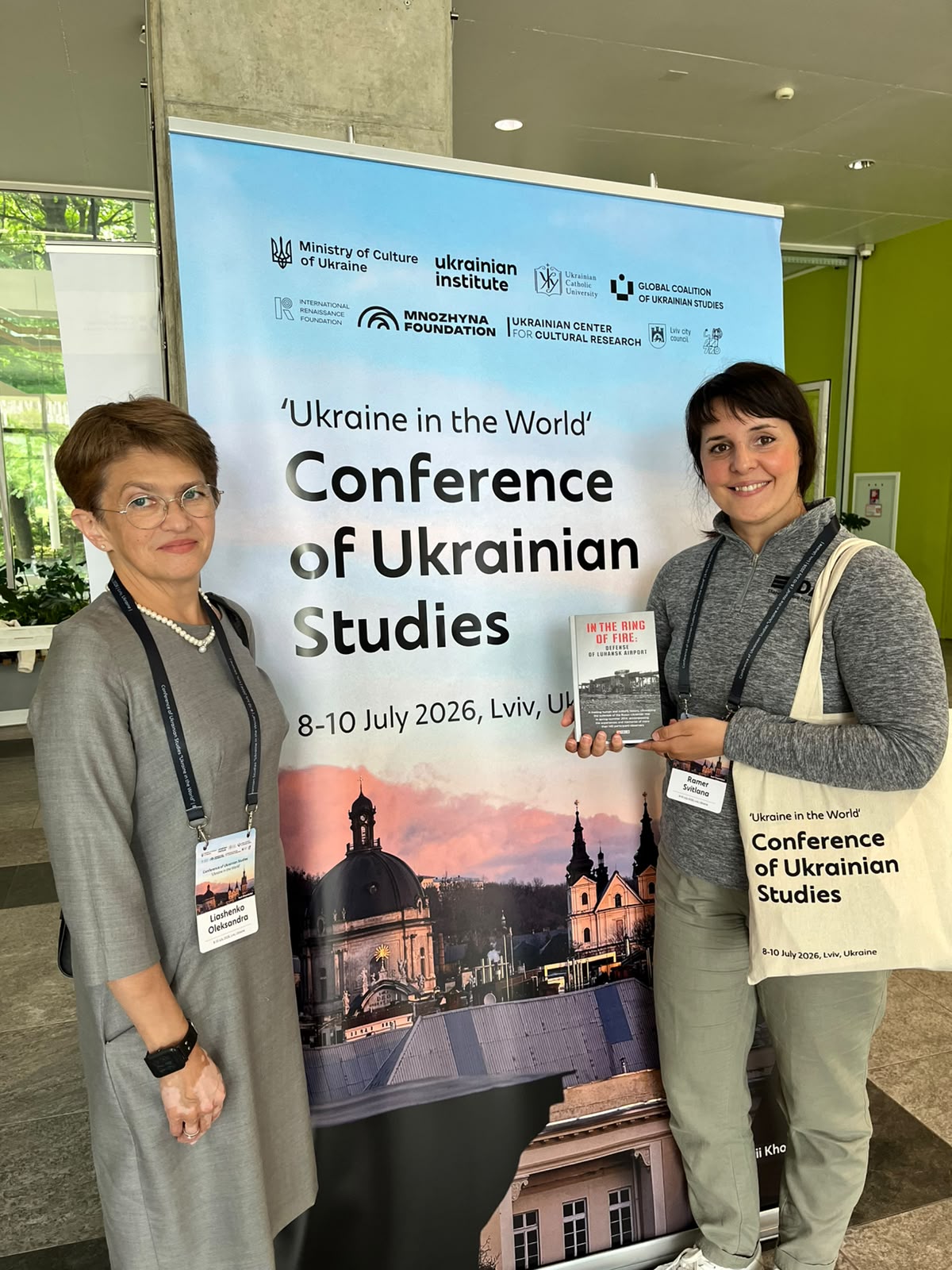
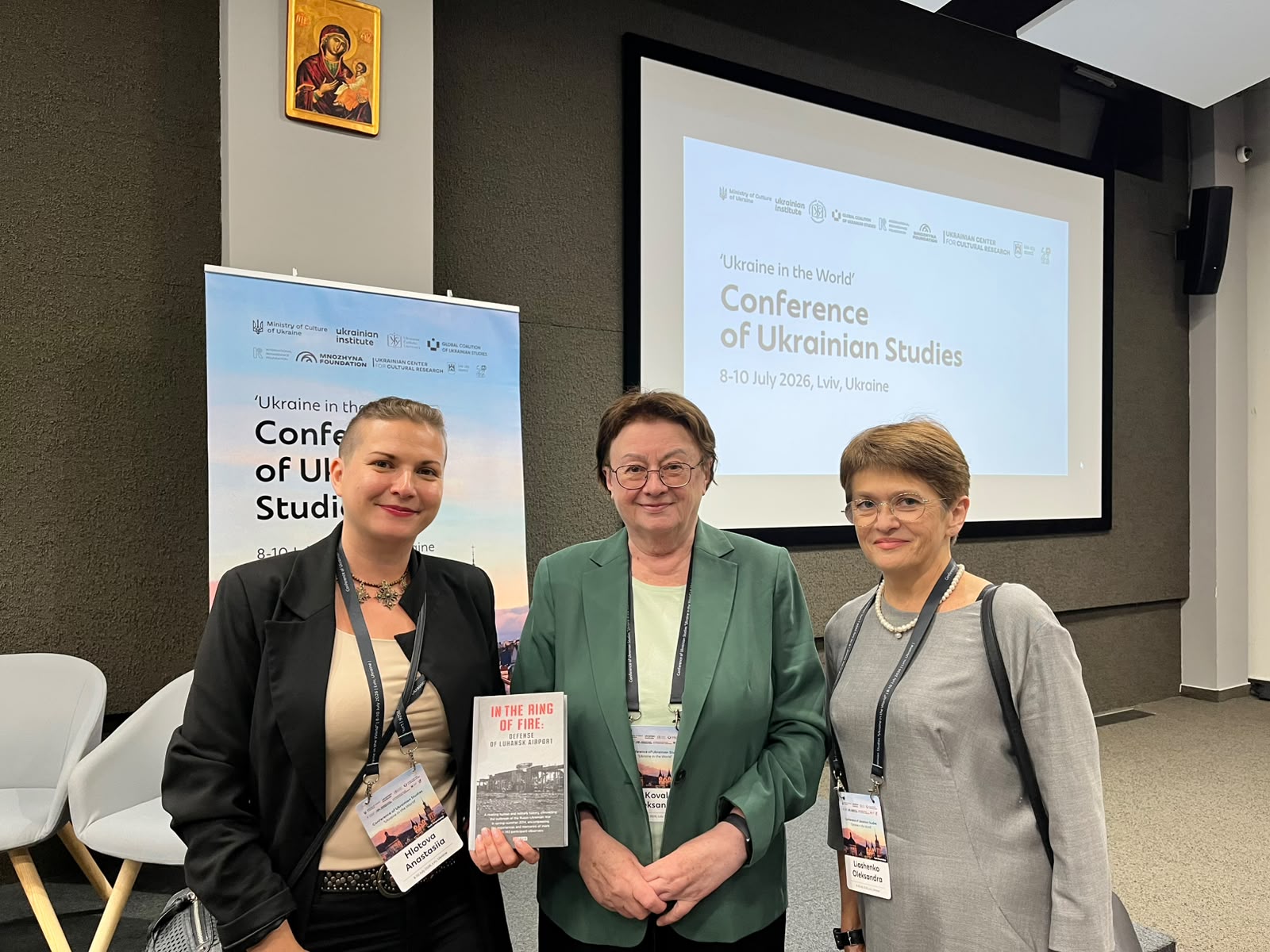
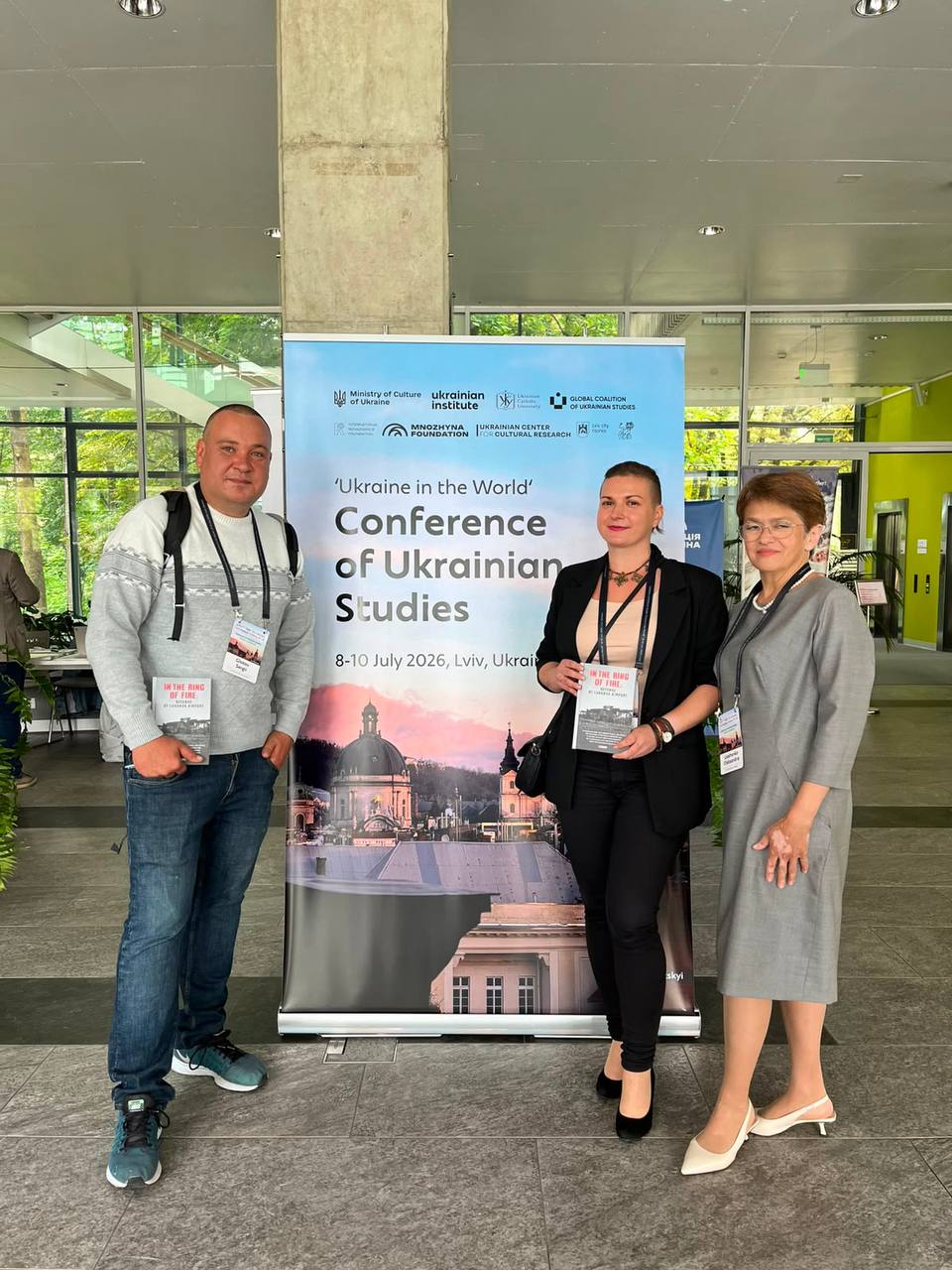
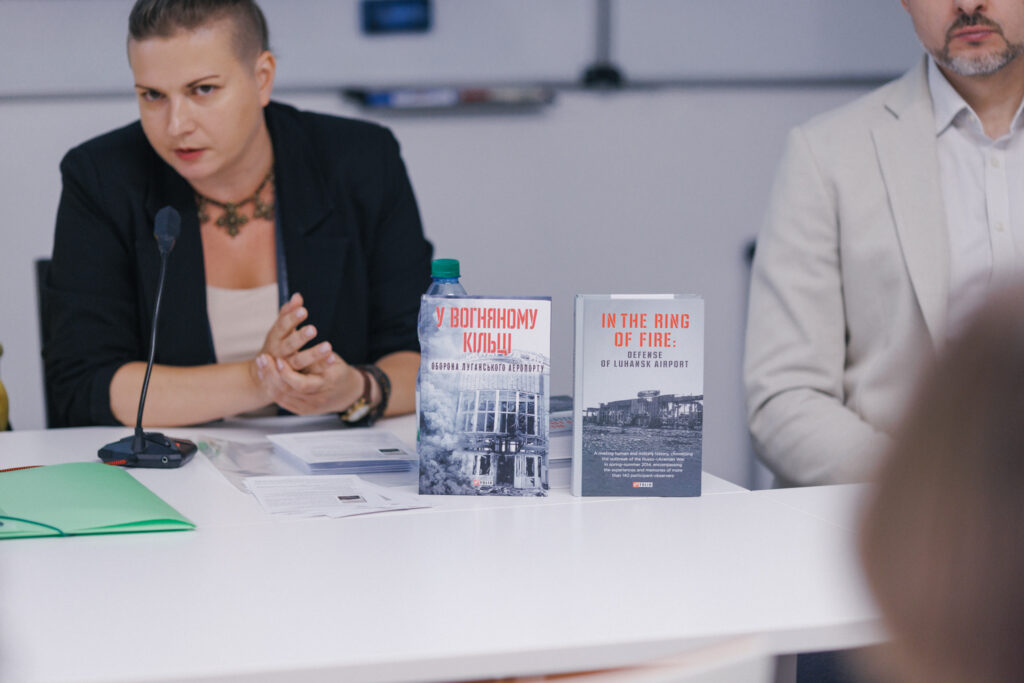
This was one of the reasons behind the publication of the book In the Ring of Fire: Defence of Luhansk Airport.
The Ukrainian-language edition was conceived as a memorialisation project based on the testimonies of direct participants. The English-language edition has significantly expanded the project’s purpose: the book is now also an instrument of international communication and advocacy.
The panel also presented the outdoor exhibition “The Beginning of Resistance: Defence of Luhansk Airport,” which at the time was displayed in Kyiv’s Kontraktova Square. The exhibition provides a concise account of the defence of the airport and makes this history accessible to a much broader audience.
By the time of the conference, copies of the English-language edition of the book had already reached numerous countries around the world. In this way, a story rooted in Luhansk is gradually becoming part of the international understanding of Russia’s aggression against Ukraine.
Loss Is More Than Destroyed Buildings and Economic Indicators
A separate part of the panel addressed the losses Ukraine has suffered as a result of the war.
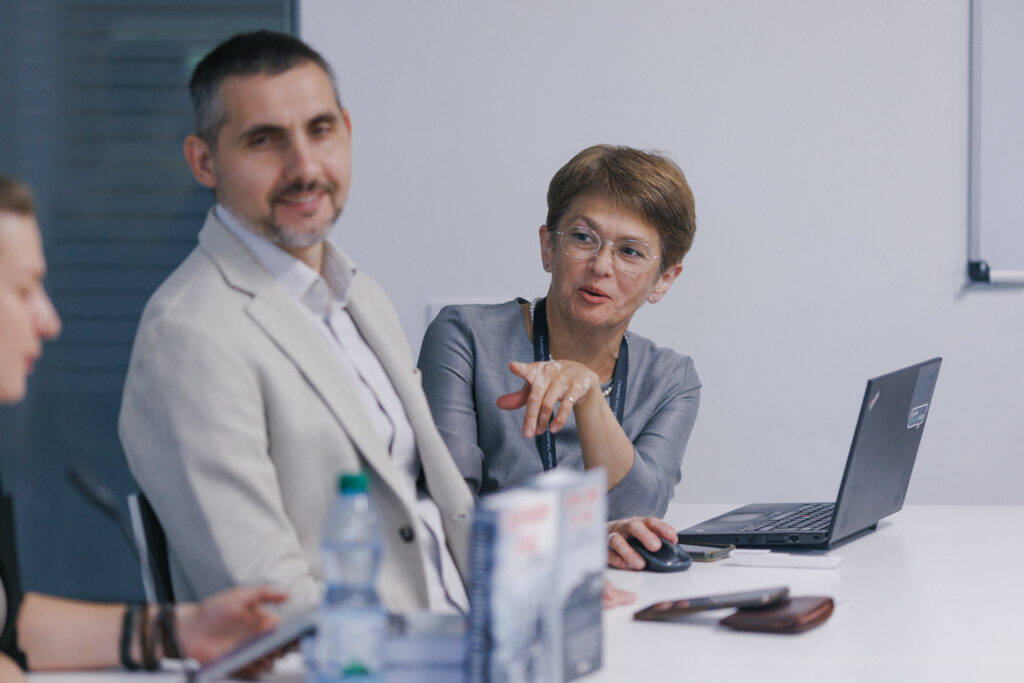
In her presentation, Doctor of Economics and Professor Oleksandra Liashenko proposed looking beyond conventional calculations of material damage or destroyed resources.
War destroys multiple forms of capital: human, economic, social, cultural, natural, educational, and institutional capital.
But there is another dimension that is much more difficult to quantify: the loss of the future.
A destroyed university is not only the monetary value of a damaged building. It also represents education that did not take place, research that was never conducted, and professional communities that were dispersed.
The death of a person is not simply a demographic statistic. It also means the loss of knowledge, skills, family histories, professional achievements, and future contributions to society.
A mined territory is not only land that cannot be used today. It can mean years or decades of restricted economic activity, environmental damage, and delayed development.
For this reason, wartime losses should also be understood as stolen future potential — opportunities that individuals, communities, and the country as a whole will never be able to realise.
The discussion also highlighted another major problem: a substantial proportion of Ukraine’s losses accumulated since the beginning of Russian aggression in 2014 has never been systematically incorporated into the international architecture for assessing war damage, which developed much more actively after 24 February 2022.
Without proper verification and international recognition of the losses incurred between 2014 and 2021, the overall picture of the consequences of Russian aggression remains incomplete.
From Remembrance to Advocacy
The panel participants ultimately arrived at a broader shared conclusion: Memory is not enough unless it can be transformed into action.
Testimonies should become archives. Archives should become evidence. Evidence should inform research, international legal processes, diplomacy, and strategic communication.
Books and exhibitions should become instruments of international advocacy. And personal stories should become part of the larger Ukrainian account of the war.
The discussion also emphasized that international communication cannot rely on English alone.
English is essential, but it does not reach every audience equally. French, Spanish, German, Polish, and other languages provide access to societies with their own information ecosystems and historical contexts.
A genuinely international Ukrainian communication strategy therefore needs to become systematically multilingual.
Bringing 2014 Back into Global Memory
At the beginning of the discussion, Andrii Kulykov made an important observation: people may remember events differently, but they share the need to understand what actually happened — in order to better understand what may happen next.
This may be the clearest explanation of why it is still necessary to talk about 2014.
Not to remain trapped in the past. But to understand the present more accurately and avoid repeating the same mistakes in the future.
Russia’s war against Ukraine did not begin on 24 February 2022.
By 2014, there was already occupation, armed conflict, the deaths of Ukrainian military personnel and civilians, destruction of communities and infrastructure, forced displacement, information aggression, and systematic attempts to erase Ukrainian identity in occupied territories.
The world saw the danger, but did not fully comprehend its scale.
For this reason, the discussion about 2014 is not merely about historical justice. It is about international security.
One of the strongest conclusions of the panel was that delaying a response to a security threat does not make the threat disappear. It only makes the eventual cost of responding much higher.
Ukraine’s experience since 2014 should therefore not remain a peripheral episode in the history of twenty-first-century Europe. It should be recognized as one of the key cases for understanding how contemporary wars are prepared and conducted — from language, narratives, and disinformation to occupation, the destruction of memory, and physical violence.
That is why 2014 remains the year of a war the world still needs to fully recognize and understand.