History of the airport’s defense
The history of the occupation of Luhansk and the defense of Luhansk Airport
Defense of Luhansk Airport in April–August 2014
The events in Luhansk during the winter and spring of 2013–2014 followed the same pattern as in most cities of the Luhansk and Donetsk regions during that period. The only unique aspect in these areas were the local pro-European demonstrations – Euromaidans, while the pro-Russian movement throughout eastern Ukraine unfolded according to the same scenario.
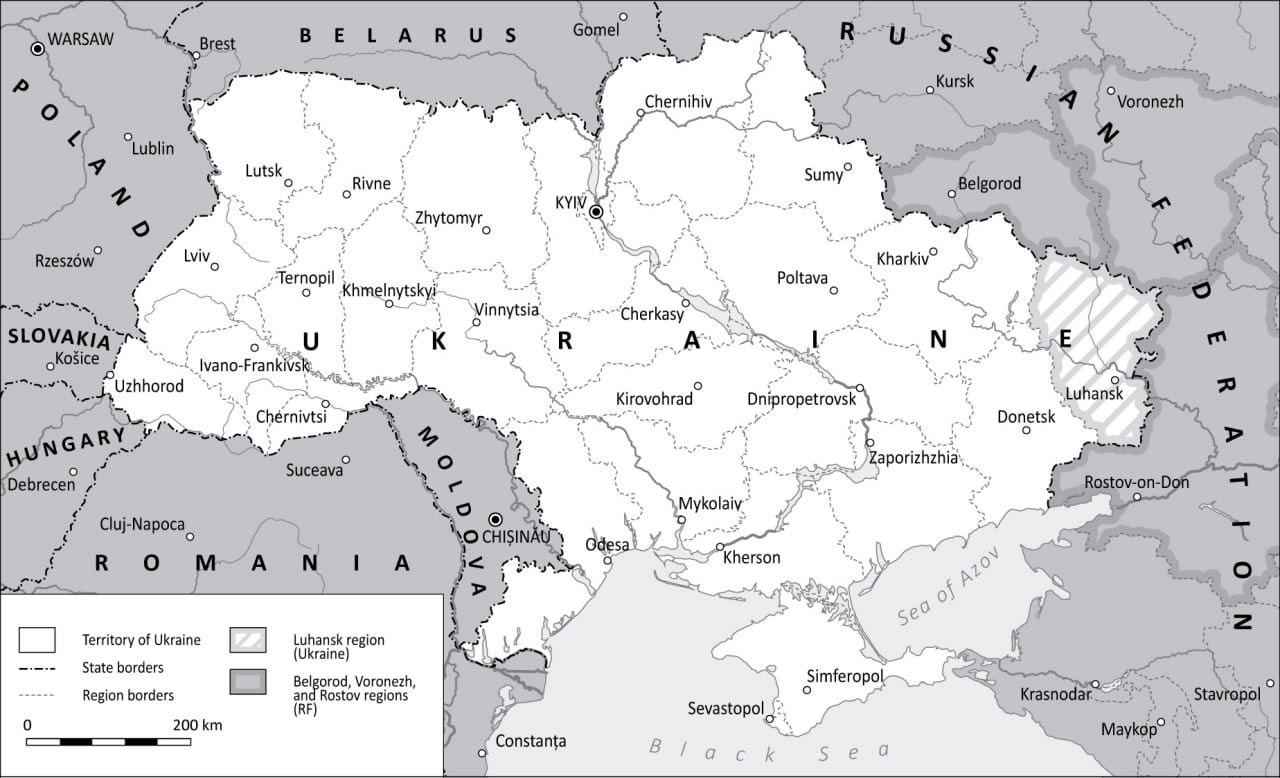
Map of Ukraine
At the end of November 2013, concerned citizens of Luhansk began organizing rallies in the city center in support of the Euromaidan in Kyiv. Later, these rallies were held in support of Ukraine’s unity, with more and more people joining – a pro-Ukrainian movement was forming in the city.
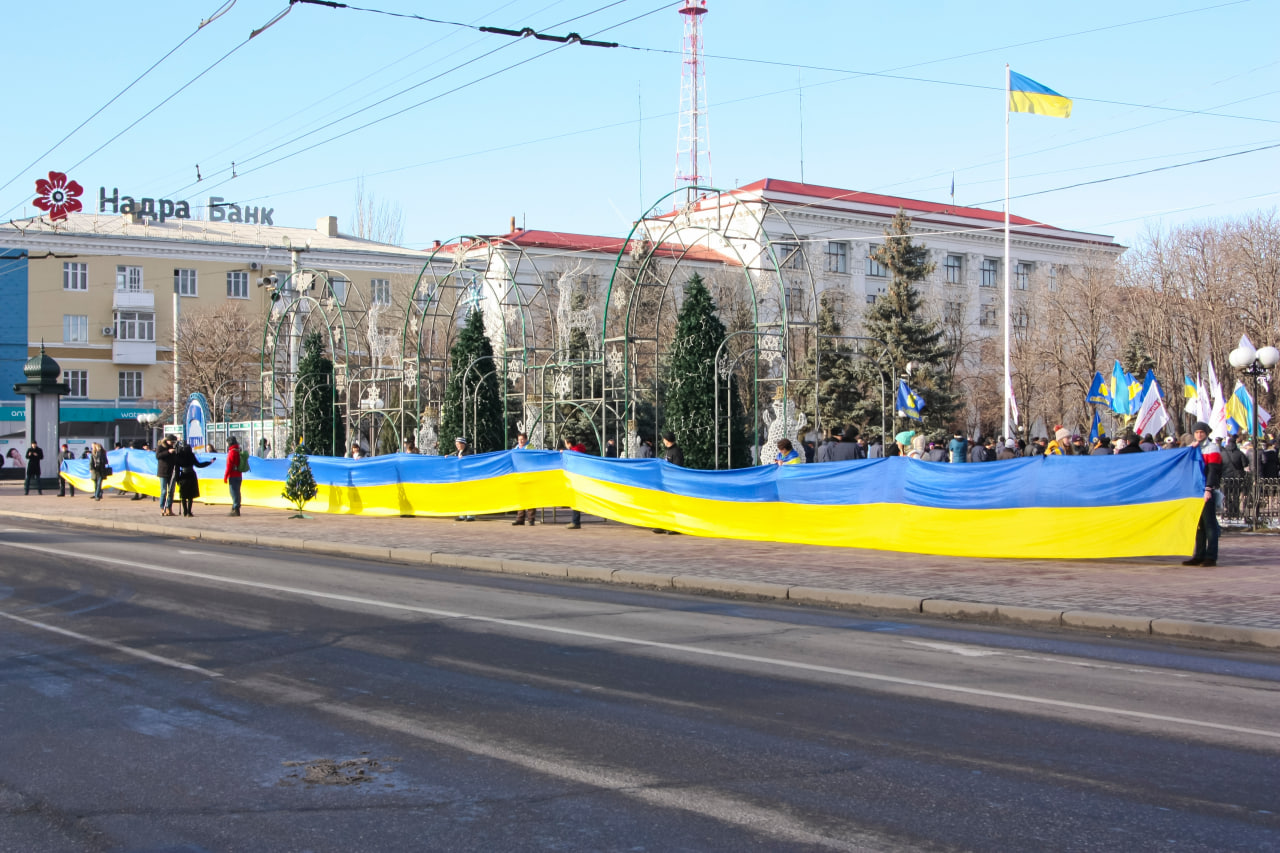
One of the actions of the Luhansk Euromaidan in the winter 2013-2014
At the same time, pro-Russian forces were also becoming active in the region. From the beginning of March, as the situation in Donetsk and Kharkiv worsened, aggressively disposed, physically strong young men from neighboring regions of the Russian Federation began to be brought into Luhansk. From that time, clashes occurred during rallies – on March 9, 2014, pro-Ukrainian activists were injured for the first time while the police just stood there doing nothing.
On April 6, militants seized the regional office of the Security Service of Ukraine in Luhansk. After the events in Crimea and the activation of pro-Russian forces in the eastern regions, the threat of a full-scale invasion by the Russian Federation on the mainland of Ukraine became increasingly real.
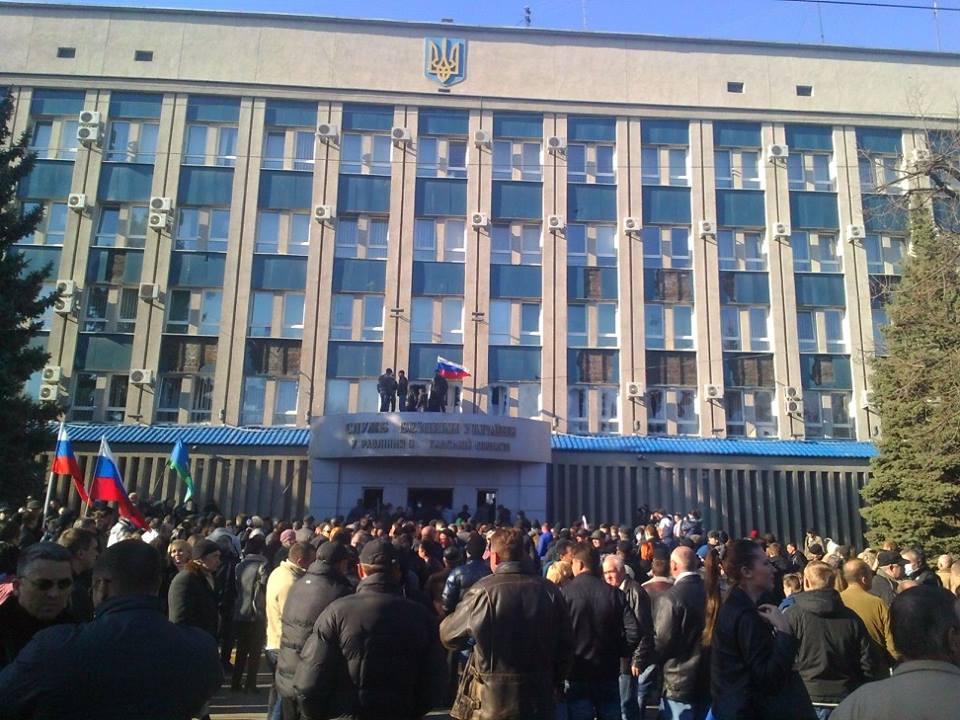
Seizure of the building of the Regional Security Service Department, April 6, 2014
So, units of the Armed Forces of Ukraine moved east. On April 8, paratroopers from Lviv – the 2nd company of the 1st battalion of the 80th Separate Airmobile Brigade – arrived at Luhansk International Airport. Initially, the task of the servicemen was to secure this important infrastructure facility, but as the situation worsened, their mission turned into a full-scale defense of the airport. Local activists immediately responded to the arrival of the military and began collecting and delivering aid to the airport and other locations where soldiers were stationed in the Luhansk region. Thus, a volunteer movement was born, which quickly gained momentum across the entire country.

The terminal building in peacetime (photo from yandex.ua/maps)
(Inscription on the building: “Luhansk Airport”)
On April 13, Acting President of Ukraine Oleksandr Turchynov officially announced the start of the Anti-terrorist Operation (ATO) in the Donbas. However, the response to the Russian-prepared special operation was too weak, and most of the security forces in the Luhansk region sided with the enemy. On April 29, Luhansk was in fact occupied: terrorists completely took over the regional state administration and other administrative buildings. In early May, Russian mercenaries made unsuccessful attempts to seize the airport, offering an opportunity to the Ukrainian military to surrender. Soon after, the first shelling of the airport began.
On May 4, a unit of the Dnipropetrovsk 25th Separate Airborne Brigade arrived at the airport for reinforcement, and on June 6, sappers and mortarmen from the 1st Separate Tank Brigade from the Chernihiv region arrived.
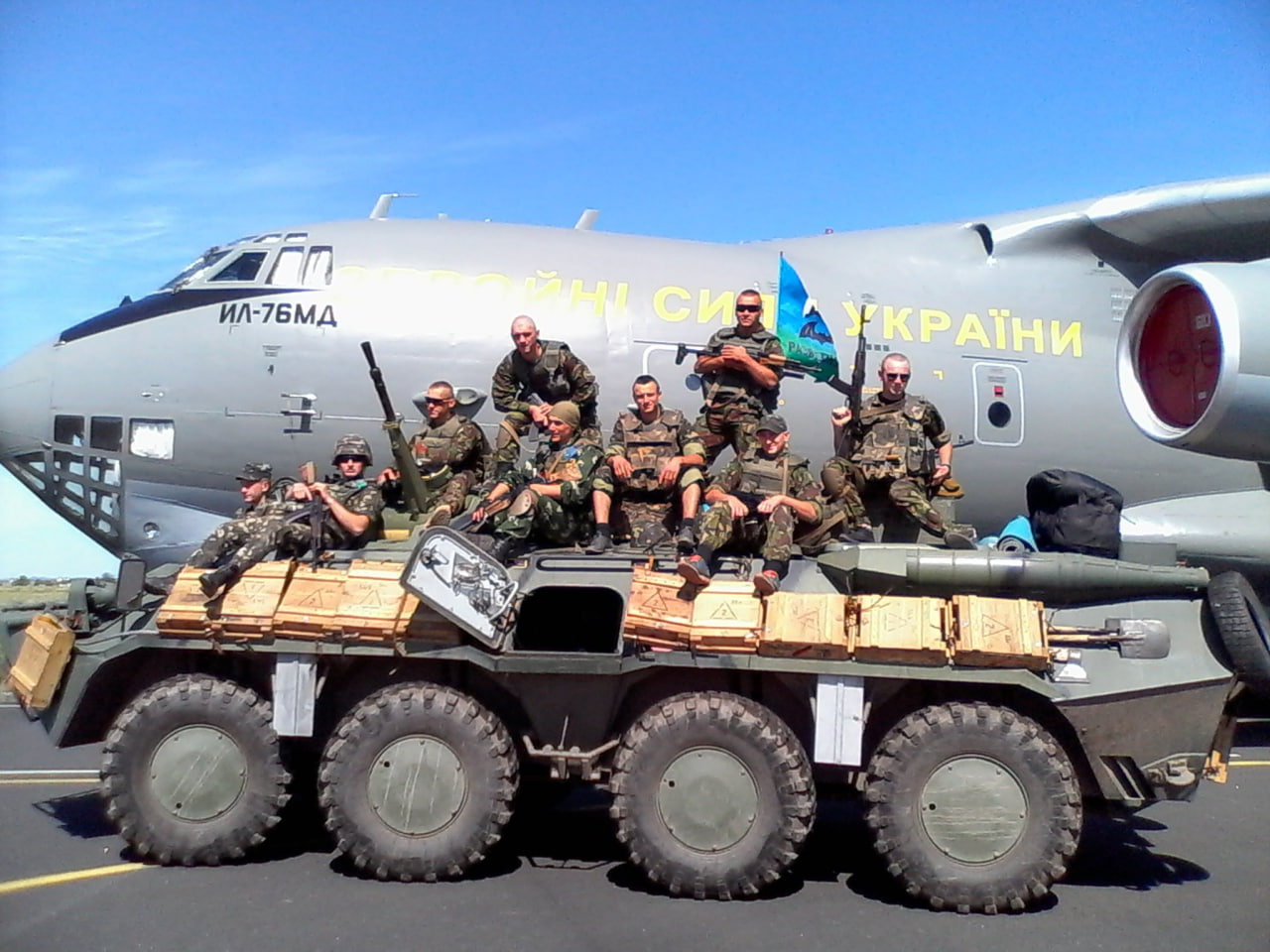
One of the Il-76MD planes arriving at the airport with supplies and ammunition, May 2014
(Inscription on the plane: “Armed Forces of Ukraine”)
On May 11, a sham referendum on the self-determination of the self-proclaimed “people’s republics” was held in most settlements of the Luhansk and Donetsk regions. On May 18, the building of the regional Ministry of Internal Affairs in Luhansk was seized, and from that moment on, the Ukrainian authorities completely lost control over what was happening in the regional center. Some pro-Ukrainian activists were forced to leave the city, while others went underground, continuing to support the military.
On the night of June 14, one of the most tragic events of the Russo–Ukrainian War occurred: terrorists shot down an Il-76MD military transport plane over Luhansk Airport. On board were 40 servicemen of the 25th Airborne Brigade and nine crew members, all of whom died. After this, no aircraft landed at the airport again. At the same time, all land routes to the airport were cut off; its defenders were surrounded. Supplies and ammunition were delivered by air. Enemy shelling became increasingly intense each day.
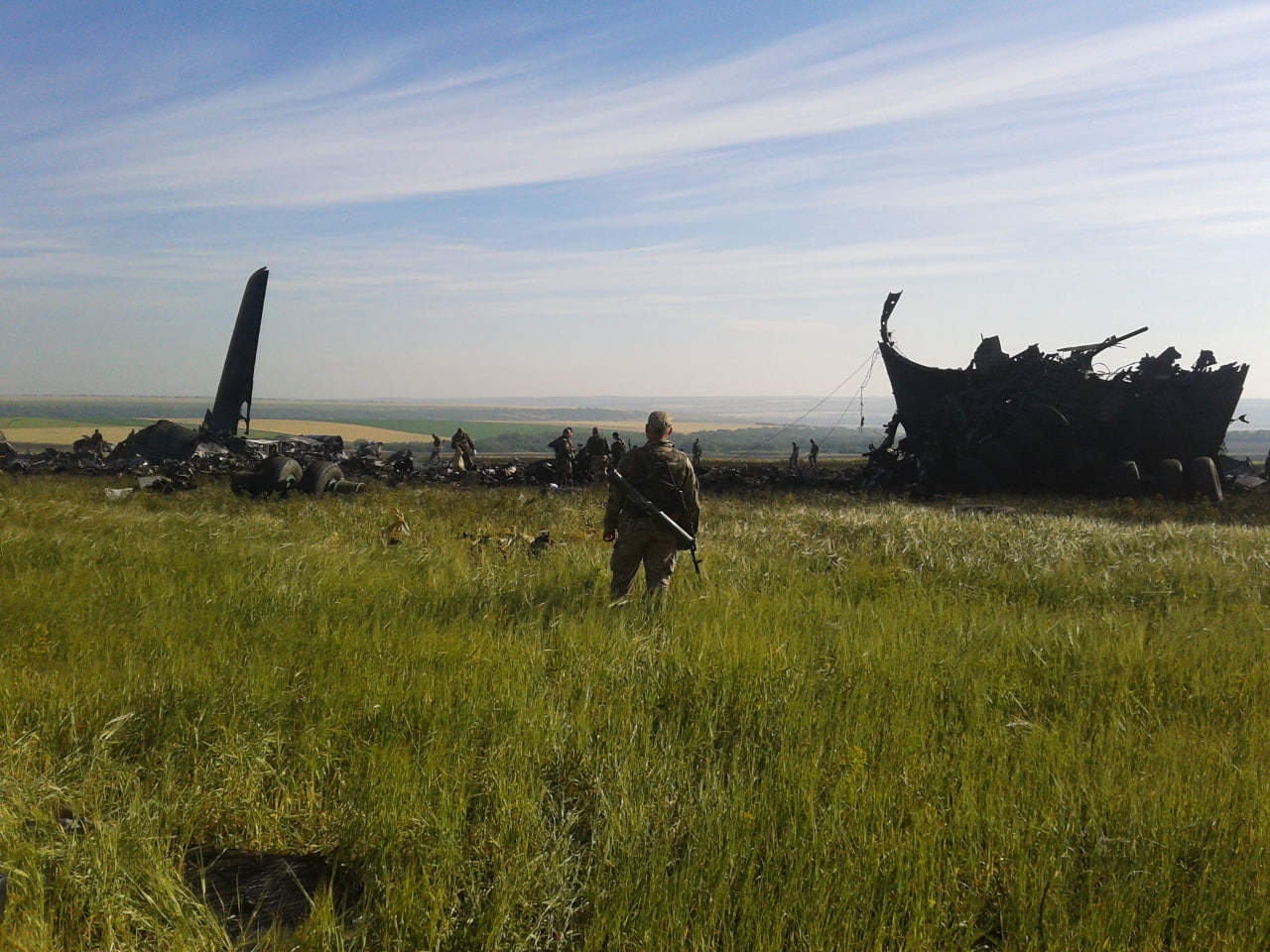
Wreckage of the downed Il-76MD aircraft, June 14, 2014
Only on July 13, did units of the 80th Airmobile Brigade, the 1st Tank Brigade, the 128th Separate Mountain Infantry Brigade from Transcarpathia, and the 8th Separate Special Forces Regiment from Khmelnytskyi manage to break through to the blocked airport with great effort and at the cost of losses. However, after this, the ring around the airport closed again. Only after the liberation of the settlement of Heorhiivka on July 21 and the city of Lutuhyne on July 27 was a “road of life” from Shchastia to the airport established. Volunteer fighters from the 24th Territorial Defense Battalion Aidar participated in both operations along with the regular troops. Subsequently, columns with supplies began to move to the airport under constant shelling, escorted by fighters of the 3rd Territorial Defense Battalion Volia from the Lviv region.
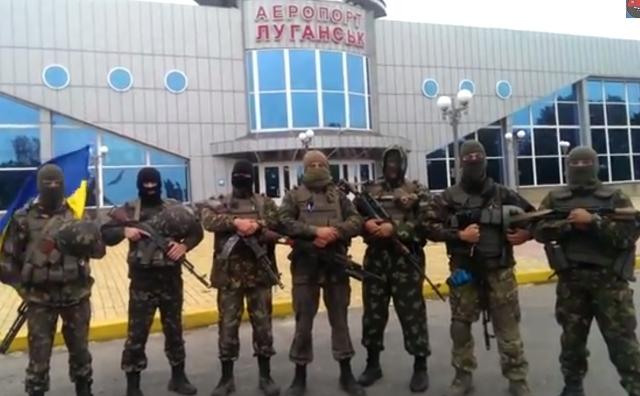
Airport defenders from the 80th Airmobile Brigade recording a video message to fellow Ukrainians, July 2, 2014
By early August, the Armed Forces of Ukraine had a significant advantage in the ATO zone – new territories along the entire front line were being liberated almost daily. Meanwhile, Luhansk was almost completely surrounded by Ukrainian troops. The last artery through which the blocked militants in Luhansk received supplies from Russia was the M04 Znamianka – Izvaryne highway (the so-called Krasnodon road). To sever this connection, on August 13, the Ukrainian military conducted a complex operation – the assault and clearing of the adjacent settlements of Novosvitlivka and Khriashchuvate, simultaneously establishing control over a strategically important height in the village of Krasne. For two weeks, fighters of the 80th Airmobile Brigade, the Battalion Aidar, the 1st Tank Brigade, and the 24th Separate Mechanized Brigade from the Lviv region heroically held these settlements under devastating enemy shelling.
Sensing the imminent destruction of their puppet “republics,” the Russian military leadership decided to go all-in. Local collaborators, along with Russian mercenaries, could not withstand the pressure of the Ukrainian army, so starting from the 20th of August, regular Russian troops began to enter the Luhansk and Donetsk regions en masse. On August 20, near Heorhiivka, the first battle took place with the Russian 76th Air Assault Division (Pskov Division). Ukrainian units of the 24th Mechanized Brigade, the 8th Regiment of Special Forces, and the Battalion of the Ministry of Internal Affairs Shtorm from Odesa, supported by helicopters of the 7th Separate Army Aviation Regiment from the Lviv region, opposed the Russians. After this clash, there were no more doubts – Russia had intervened in the territory of eastern Ukraine.
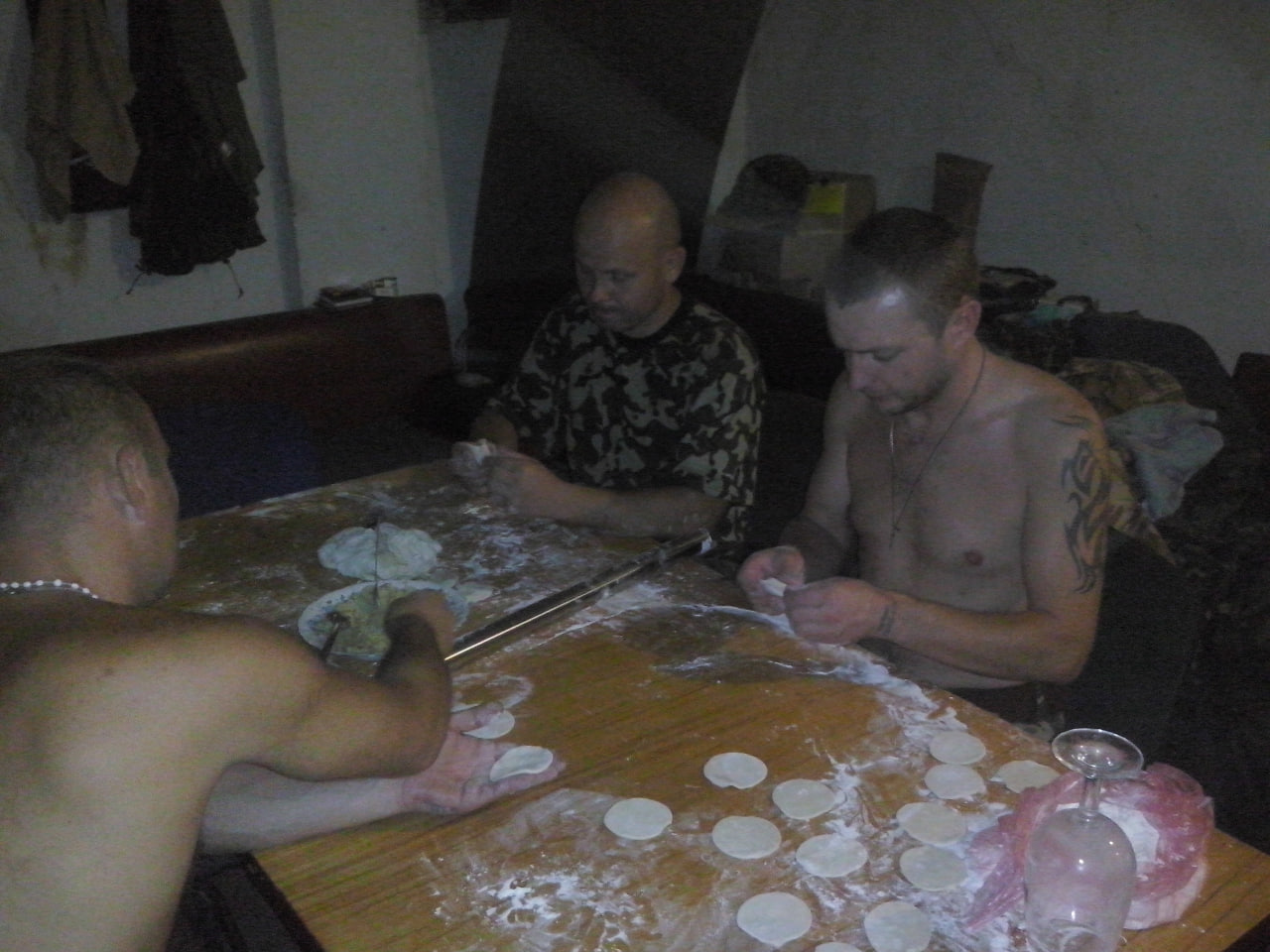
Soldiers of the 80th Airmobile Brigade making dumplings under shelling, August 23, 2014
The enemy then resorted to subterfuge and cunning. On August 22, the first so-called “humanitarian convoy” entered the Luhansk region. Ukrainian military could not attack the columns under white flags – this would have caused a major diplomatic scandal and provided a rich information opportunity for Russian propaganda. Thus, the militants received significant reinforcements and became active on various sections of the front. Ukrainian troops gradually lost control over territories. On August 27, a decision was made to withdraw Ukrainian units from Novosvitlivka and Khriashchuvate – the settlements were almost wiped off the face of the earth, making further holding impossible.
In the last days of August, the enemy ruthlessly bombarded Luhansk Airport from Luhansk, Krasnodon, and directly from the territory of the Russian Federation. On August 31, a massive assault on the airport took place: the enemy surrounded the Ukrainian soldiers in a semicircle, and soon enemy tanks were driving on the runway. The Ukrainian fighters had no more ammunition or adequate shelter; a shot from a heavy 240 mm self-propelled mortar 2S4 Tulpan (the largest mortar system in use today) damaged the anti-nuclear bunker where the defenders of the airport were hiding from the shelling. The explosion was so powerful that the wall of the bunker cracked. In the evening, the Chief of Staff of the 80th Airmobile Brigade, A. Kovalchuk, made a difficult and unexpected decision for the enemy…
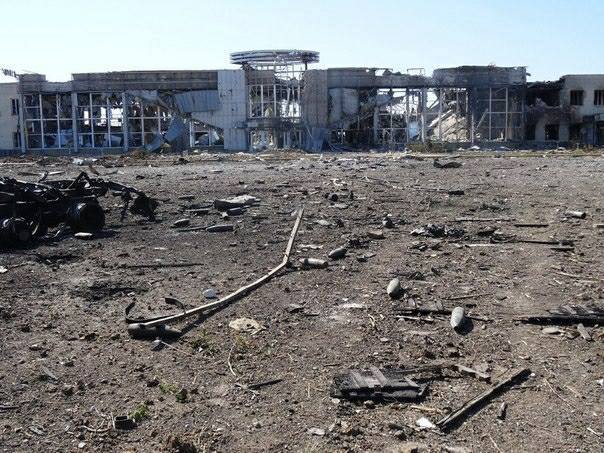
The damaged terminal building as of the end of August 2014
The history of the defense of Luhansk Airport can teach many lessons. It is a story of unbreakable spirit in hostile encirclement, of loss and self-sacrifice, of devotion and mutual assistance between the army and the people it serves.